

If you have been dealing with jaw pain, clicking sounds when you chew, or headaches that seem to come out of nowhere, there is a good chance your temporomandibular joint is involved. TMJ disorder is one of those conditions that is easy to dismiss as stress or a bad night’s sleep, but when it becomes a consistent part of your day, it is worth understanding what is actually going on and what can be done about it. Dr. Logan Miller at North Austin Dentistry treats TMJ disorder regularly and takes a conservative, patient-centered approach to helping people in Austin find real relief.
What Is TMJ Disorder
TMJ disorder refers to dysfunction of the temporomandibular joint, the hinge-like joint that connects your lower jaw to your skull on both sides of your face. This joint is one of the most frequently used in the body. Every time you chew, speak, yawn, or swallow, it is doing its job. When something goes wrong with the joint itself, the surrounding muscles, or the disc of cartilage that cushions the joint, the result is a range of symptoms that can affect your jaw, head, neck, ears, and sleep.
Understanding the Temporomandibular Joint
The TMJ is located just in front of each ear. It works like a sliding hinge, allowing your jaw to move up and down and side to side. That range of motion is what makes eating and speaking possible. When the joint is functioning normally, you do not think about it at all. When it is not, even simple things like biting into an apple or finishing a conversation can become uncomfortable. TMJ disorder can affect one side of the jaw or both, and symptoms can range from mild and occasional to chronic and disruptive.
How Common Is TMJ Disorder
TMJ disorder is more widespread than most people realize. Estimates suggest that around ten million Americans are affected at any given time, and many of them go without a diagnosis for months or even years because the symptoms can mimic other conditions. Jaw pain gets attributed to stress, ear pain gets attributed to infection, and headaches get chalked up to tension. If your symptoms keep coming back and do not have a clear explanation, TMJ disorder is worth discussing with a dentist who is trained to recognize it.
Why TMJ Disorder Should Not Be Ignored
The condition does not typically resolve on its own, and symptoms tend to become more pronounced the longer they go unaddressed. What starts as occasional jaw soreness can develop into restricted movement, chronic headaches, and sleep disruption. The sooner you get an accurate diagnosis and start treatment, the more straightforward the path to relief tends to be. Dr. Miller’s approach at North Austin Dentistry starts with the most conservative options available, which means most patients can manage their symptoms without surgery or invasive procedures.
Signs and Symptoms of TMJ Disorder
TMJ disorder presents differently from person to person, which is part of what makes it easy to overlook. Some people experience primarily jaw-related symptoms. Others feel it more in their head, ears, or neck. Most people have a combination of symptoms that fluctuate with stress, sleep, and daily habits.
Jaw Pain, Clicking, and Locking
The most recognizable signs of TMJ disorder involve the jaw itself. You might notice a popping or clicking sound when you open your mouth wide or shift your jaw to the side. There may be soreness near the ear or along the jawline that gets worse after eating or talking for extended periods. In more advanced cases, the jaw can feel stuck or lock temporarily, either in an open or closed position. This happens when the disc inside the joint shifts out of place and disrupts normal movement.
Headaches and Ear Pain Linked to TMJ
Because the temporomandibular joint sits so close to the ear canal and connects to a network of muscles and nerves that run through the head and face, TMJ disorder frequently produces symptoms that have nothing obvious to do with the jaw. Chronic headaches, particularly at the temples or behind the eyes, are a common complaint. Ear pain, a sensation of fullness or pressure in the ear, and even ringing sounds can all be traced back to TMJ dysfunction. Many patients spend considerable time chasing these symptoms without realizing the jaw is at the root of them.
Neck and Shoulder Discomfort
The muscles involved in jaw function do not work in isolation. They connect to and influence the muscles of the neck and upper shoulders, which means chronic jaw tension can radiate outward and create stiffness and soreness well beyond the jaw itself. If you regularly wake up with a tight neck or feel tension building across your shoulders throughout the day, especially in combination with any jaw-related symptoms, it is worth mentioning to Dr. Miller during your evaluation.
How TMJ Affects Sleep and Daily Life
Jaw pain that intensifies at night, teeth grinding during sleep, and the general discomfort of an overworked jaw joint can significantly disrupt sleep. Poor sleep compounds everything else. Fatigue makes stress harder to manage, and stress tends to make clenching and grinding worse, which puts more pressure on the joint. This cycle can affect your mood, your concentration, and your ability to get through the day comfortably. For patients dealing with moderate to severe TMJ disorder, addressing it is not just about the jaw. It is about getting back to sleeping and functioning without constant interference.
What Causes TMJ Disorder
TMJ disorder rarely has a single cause. In most cases, it develops from a combination of factors that put prolonged stress on the joint and the surrounding muscles.
Teeth Grinding and Clenching
Bruxism, or habitual teeth grinding and clenching, is one of the most common contributors to TMJ disorder. It places significant and repetitive force on the joint, far beyond what normal chewing produces. Many people grind their teeth at night without knowing it, and the first indication is often jaw soreness in the morning or a dentist noticing wear patterns on the teeth. Stress and anxiety tend to intensify grinding, which is why TMJ symptoms often flare during high-pressure periods.
Stress and Jaw Tension
Even without obvious grinding, stress causes many people to hold tension in their jaw throughout the day. You might clench your teeth during a difficult phone call, tighten your jaw while concentrating at your desk, or notice your teeth pressed together when you are feeling overwhelmed. Over time, this habitual tension exhausts the jaw muscles and strains the joint. Recognizing this pattern is an important part of managing TMJ disorder, because treatment works best when lifestyle factors are addressed alongside the physical symptoms.
Bite Misalignment
When the upper and lower teeth do not come together properly, the jaw compensates by shifting into a position that allows them to meet. That compensation places uneven stress on the TMJ and the muscles that support it. Misalignment can result from crooked teeth, missing teeth that have caused the bite to shift, or dental work that has altered the way the teeth fit together. Correcting the bite is sometimes a component of TMJ treatment when misalignment is identified as a contributing factor.
Jaw Injury and Arthritis
A direct injury to the jaw, such as one sustained during an accident or a sports-related impact, can damage the joint or the disc inside it and trigger TMJ disorder that persists long after the initial injury has healed. Arthritis is another cause, particularly in older patients. When the cartilage inside the joint breaks down over time, the result is inflammation, pain, and restricted movement that can look and feel very similar to other forms of TMJ disorder. Both causes benefit from early evaluation so that the right type of treatment can be identified.
What Happens When TMJ Disorder Goes Untreated
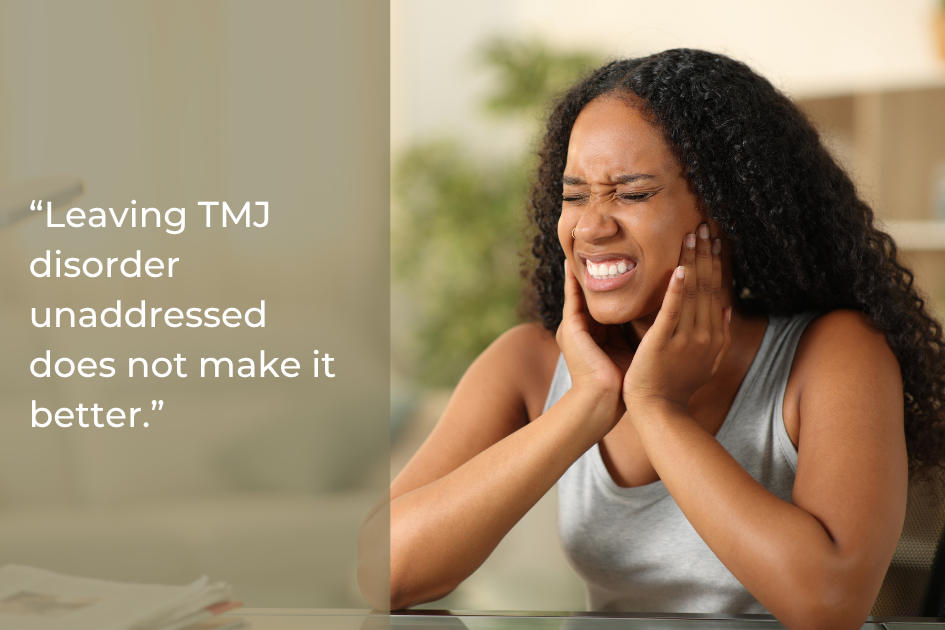
Leaving TMJ disorder unaddressed does not make it better. For most patients, the opposite is true.
Worsening Pain and Reduced Jaw Mobility
Without intervention, TMJ symptoms tend to progress. Occasional jaw soreness can become daily pain. A jaw that clicks can become a jaw that locks. Discomfort that once appeared after a particularly stressful week can become a constant presence. As the joint and surrounding muscles become more chronically strained, the range of motion in the jaw can decrease, making it harder to open your mouth fully or chew certain foods.
Damage to Teeth from Chronic Grinding
If teeth grinding is part of the picture, untreated TMJ disorder means that grinding continues unchecked. Over months and years, this wears down the enamel on the chewing surfaces of the teeth, making them more vulnerable to sensitivity, decay, and fracture. Worn enamel cannot be restored on its own, and the damage can reach a point where crowns or other restorative work is needed. Addressing the grinding early with a custom night guard protects the teeth from damage that would otherwise be permanent.
The Impact on Sleep and Overall Health
Chronic pain and disrupted sleep are connected in ways that affect the whole body. Patients with untreated TMJ disorder often report fatigue, increased irritability, difficulty concentrating, and a general sense of not feeling well that they struggle to attribute to a specific cause. When the jaw joint and surrounding muscles are not given a chance to rest and recover, the body stays in a low-level state of physical stress that takes a toll over time. Treating TMJ disorder is an investment in more than just jaw comfort.
TMJ Treatment Options at North Austin Dentistry
Dr. Miller takes a conservative approach to TMJ treatment, starting with the least invasive options and working from there based on how a patient responds. Most people find meaningful relief without needing anything surgical.
Custom Night Guards for Teeth Grinding
A custom-fitted night guard is one of the most effective first steps for patients whose TMJ disorder is linked to nighttime grinding or clenching. The guard creates a cushion between the upper and lower teeth, absorbing the force of grinding so that the jaw muscles and joint are not taking the full impact. Unlike over-the-counter options, a custom night guard from North Austin Dentistry is made from precise impressions of your teeth, so it fits comfortably and stays in place through the night. Many patients notice a significant reduction in morning jaw soreness within the first few weeks of consistent use.
Bite Adjustment Therapy
When bite misalignment is contributing to TMJ symptoms, minor adjustments to the way the teeth come together can reduce the strain the jaw is compensating for. Dr. Miller evaluates the bite carefully and makes targeted modifications to help the jaw settle into a more balanced position. This is a precise and conservative process that can make a meaningful difference for patients whose discomfort is tied to uneven bite forces.
Jaw Exercises and Physical Therapy Recommendations

Gentle, targeted exercises can help improve flexibility in the jaw, reduce muscle tightness, and support recovery. Dr. Miller may recommend a series of stretching and strengthening movements that patients can perform at home, along with guidance on posture and habits that tend to aggravate TMJ symptoms. Heat application before exercises can help loosen tight muscles and make the movements more comfortable. These recommendations are tailored to each patient’s specific presentation rather than a generic set of instructions.
Botox Injections for Chronic Jaw Muscle Tension
For patients who continue to experience significant jaw muscle tension despite other treatments, Botox injections offer another option. When injected into the masseter muscles, the large muscles responsible for clenching and chewing, Botox temporarily reduces their ability to contract with full force. This gives overworked muscles a chance to rest and recover, and many patients experience a notable reduction in pain and tension. The effects typically last three to six months, and repeat treatments can help break the cycle of chronic clenching for patients who have not found sufficient relief through other methods alone.
Lifestyle Modifications That Support TMJ Relief
Treatment works better when it is supported by changes to everyday habits. Switching to softer foods during flare-ups takes strain off the joint while it heals. Building stress management into the daily routine, whether through exercise, breathing techniques, or other approaches, reduces the underlying tension that drives clenching and grinding. Being mindful of jaw posture during the day, keeping the teeth slightly apart rather than pressed together, is a small habit that makes a noticeable difference for many patients over time.
Why Patients in Austin Choose Dr. Logan Miller for TMJ Care
A Conservative, Non-Invasive Approach First
Dr. Miller’s philosophy when it comes to TMJ disorder is to start with the most straightforward, least invasive option that fits the patient’s symptoms and work from there. That means patients are not immediately pushed toward complex procedures. They start with a thorough evaluation, a clear explanation of what is contributing to their symptoms, and a treatment plan that reflects their specific situation rather than a generic protocol.
Personalized Treatment Plans Based on Your Symptoms
No two TMJ cases are identical. The mix of causes, the severity of symptoms, and how long the condition has been developing all influence what the right course of treatment looks like. Dr. Miller takes the time to understand each patient’s full picture before making recommendations, and he adjusts the approach as the patient progresses. That level of individualized attention is what sets the care at North Austin Dentistry apart for patients who have been managing jaw pain without a real solution.
You Do Not Have to Keep Living With Jaw Pain
Jaw pain, headaches, and disrupted sleep are not things you have to simply push through. TMJ disorder is a well-understood condition with a range of effective, non-surgical treatment options, and the team at North Austin Dentistry has the experience to help you figure out what is driving your symptoms and what will actually help. If any of what you have read sounds familiar, scheduling an evaluation with Dr. Miller is the right next step toward feeling better.