
Nearly 20% of children between the ages of 5 and 11 have untreated cavities, and the weeks around Halloween do not help that number. The surge of sugary treats that comes with the holiday creates a real challenge for dental health, but the good news is that a few informed choices and simple habits can go a long way toward keeping your family’s teeth in good shape. Here is what you should know before the candy bags start filling up.
Why Halloween Is One of the Hardest Weeks of the Year on Your Teeth
It is not just the amount of sugar that makes Halloween rough on teeth. It is the combination of frequency, candy type, and habits that tend to go out the window when there is a bowl of treats sitting on the counter. Understanding how sugar actually affects your teeth and why certain candies are worse than others puts you in a better position to navigate the season without undoing months of good dental hygiene.
How Sugar Actually Damages Your Teeth
Sugar itself does not damage teeth directly. What happens is that the bacteria naturally present in your mouth feed on sugar and produce acid as a byproduct. That acid is what attacks the enamel, gradually weakening the outer layer of the tooth and creating the conditions for cavities to develop. The more frequently teeth are exposed to sugar, and the longer that sugar lingers in the mouth, the more opportunity bacteria have to do damage. This is why eating a large amount of candy in one sitting is actually less harmful than snacking on a few pieces throughout the entire day.
Why the Type of Candy Matters as Much as the Amount
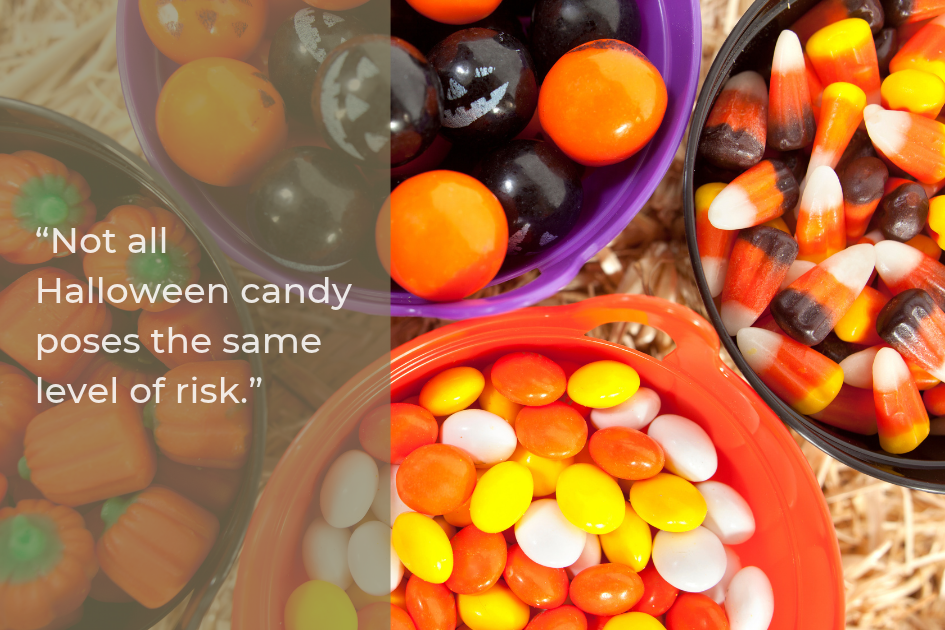
Not all Halloween candy poses the same level of risk. The biggest factors are how long the sugar stays in contact with the teeth and how easy it is to wash away. Candy that dissolves quickly and is rinsed out by saliva is far less problematic than candy that sticks to grooves and surfaces and stays there long after eating. Understanding which types fall into which category makes it easier to make smarter choices when sorting through the trick-or-treat haul.
The Worst Halloween Candies for Your Teeth
Some Halloween staples are significantly harder on dental health than others. These are the ones worth limiting or avoiding, especially for younger kids whose enamel is still developing.
Sticky and Chewy Candies
Gummies, caramels, taffy, and any other candy with a chewy, sticky texture are among the most damaging options available. They press into the grooves on the surface of teeth and between teeth, and they stay there. Saliva has a hard time washing them away, and brushing does not always remove them completely either. The prolonged sugar contact that results gives bacteria a much longer window to produce acid. If your child eats sticky candies, brushing thoroughly afterward is more important than usual, and flossing is non-negotiable.
Hard Candies and Lollipops
Hard candies are a different kind of problem. Rather than sticking to teeth, they work by dissolving slowly in the mouth over several minutes, which means the teeth are bathed in sugar for an extended period. A lollipop that takes ten minutes to finish is exposing teeth to sugar for that entire time. There is also the mechanical risk of biting down on a hard candy and chipping or cracking a tooth, which is worth keeping in mind for kids who tend to crunch rather than suck.
Sour Candies and the Acid Problem
Sour candies bring an additional concern beyond sugar: acidity. The sour taste comes from acids, typically citric or tartaric acid, that are added to the candy itself. This means that eating sour candy delivers a direct acid attack on the enamel before bacteria even get involved. Candies like Warheads, Sour Patch Kids, Lemonheads, and Sour Skittles all fall into this category. Rinsing with water after eating sour candy helps neutralize some of that acid, but it is worth keeping these treats to a minimum, particularly for children with sensitive or already weakened enamel.
The Best Halloween Candy Options for Dental Health
No candy is truly good for teeth, but some options are considerably less damaging than others. If you are choosing what to hand out or helping your child pick favorites from their haul, these are worth prioritizing.
Chocolate and Why It Is a Better Choice
Plain chocolate, whether milk or dark, is one of the better Halloween candy choices from a dental standpoint. It melts and washes away quickly, limiting the amount of time sugar is in contact with teeth. It does not stick to grooves the way chewy candies do, and it does not bathe the teeth in sugar for minutes at a time the way hard candies do. Dark chocolate in particular contains flavonoids that have some evidence behind them for fighting bacteria in the mouth. It is not a health food, but compared to most of what ends up in a trick-or-treat bag, chocolate is a reasonable choice.
Sugar Free Options Worth Considering
Sugar-free candies sweetened with xylitol are worth seeking out, particularly for younger kids. Xylitol is a sugar alcohol that bacteria cannot metabolize the same way they process regular sugar, which means it does not trigger the same acid production. Some research suggests it may actually help reduce cavity-causing bacteria over time. Sugar-free gum sweetened with xylitol is another good option, especially after meals or candy, since chewing stimulates saliva production which helps clean the mouth naturally.
Smart Habits That Protect Your Smile During the Halloween Season
The habits around eating candy matter just as much as the candy itself. A few small adjustments to timing and routine can meaningfully reduce the impact Halloween has on your family’s dental health.
The Best Time to Eat Halloween Candy
Eating candy as part of a meal is better than eating it between meals. During meals, saliva production is naturally higher, which helps neutralize acids and wash sugar away more effectively. Eating candy on its own as an afternoon snack keeps acid levels elevated in the mouth for longer. Establishing a rule of candy after dinner rather than throughout the day is one of the most practical things you can do to reduce cavity risk during the Halloween season.
Why Rinsing with Water Makes a Difference
Rinsing with water after eating candy is a simple habit that genuinely helps. It washes away loose sugar and sticky residue, dilutes the acid in the mouth, and stimulates saliva flow. It is not a substitute for brushing, but it is a useful step in between and especially helpful in situations where brushing is not immediately possible, like after eating candy at school or a party. Getting kids into the habit of drinking water after sweets is worth building in as a long-term routine, not just for Halloween.
Waiting Before You Brush
It might seem logical to brush immediately after eating candy, but waiting about 30 minutes is actually better for your enamel. When you eat something sugary or acidic, the enamel is temporarily softened by the acid exposure. Brushing during that window can cause more wear than letting saliva neutralize the environment first. Rinse with water right away, then brush after giving your mouth time to recover. This applies especially after sour candies, which deliver a direct acid hit.
How to Actually Limit the Candy Stash Without a Meltdown
Completely banning candy creates more drama than it is worth and tends to backfire. A more realistic approach is setting a clear daily limit from the start, a specific number of pieces rather than a vague “not too much.” Keeping the candy stored somewhere out of sight rather than on the counter reduces casual snacking. Some families trade in a portion of the candy haul for a small non-candy reward, which kids often find surprisingly appealing. The goal is not eliminating candy but keeping consumption predictable and manageable rather than letting it stretch across weeks of constant snacking.
Dental Treatments That Protect Kids’ Teeth Year Round
Good habits at home are important, but professional preventive care makes a meaningful difference in how vulnerable kids’ teeth are to cavities in the first place.
Dental Sealants for Kids
Dental sealants are thin protective coatings applied to the chewing surfaces of the back teeth, where the grooves are deep enough that sticky food and bacteria can get lodged even with good brushing. The sealant fills those grooves and creates a smooth, easy-to-clean surface. They are quick to apply, completely painless, and can last several years with normal wear. For kids who are prone to cavities or who have particularly deep tooth grooves, sealants are one of the most effective preventive measures available. The American Dental Association recommends them as soon as the permanent molars come in, typically around age 6 for the first molars and age 12 for the second.
Fluoride Treatments
Professional fluoride treatments applied during routine dental visits deliver a higher concentration of fluoride than toothpaste alone, strengthening enamel and making it more resistant to the acid that causes decay. For kids who eat a lot of sugar or who have had cavities before, in-office fluoride treatments are a simple, painless way to add an extra layer of protection between visits. Dr. Miller will let you know how often your child would benefit from a fluoride treatment based on their individual cavity risk.
What to Do If Your Child Gets a Cavity
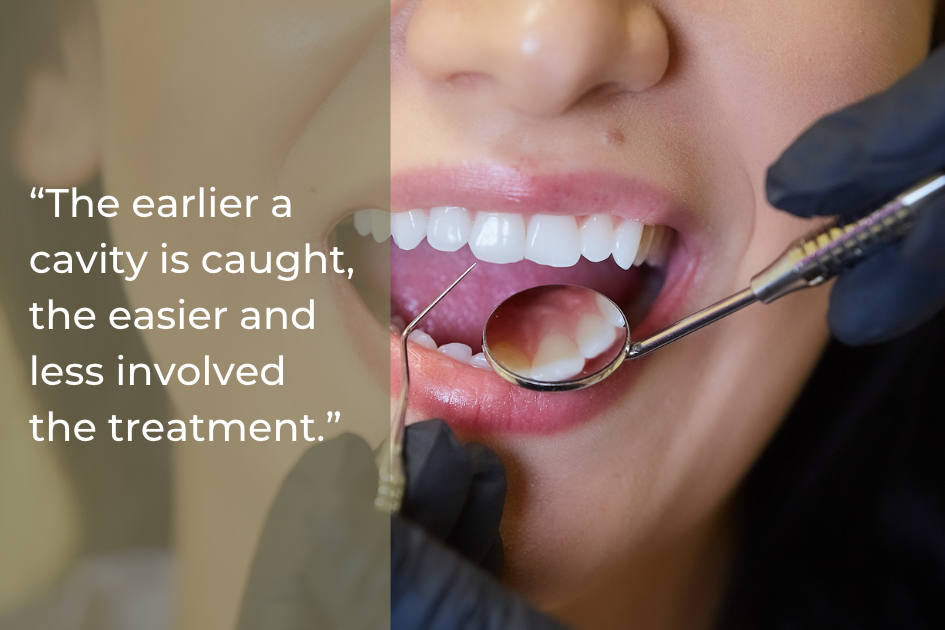
If your child develops a cavity, the most important thing is not to wait on it. Small cavities are straightforward to treat with a simple filling. Left untreated, decay spreads into deeper layers of the tooth and can eventually affect the pulp, leading to pain and more complex treatment. If your child mentions tooth pain or sensitivity, or if you notice any dark spots or visible holes on their teeth, schedule a visit promptly. The earlier a cavity is caught, the easier and less involved the treatment.
Signs Your Child May Have a Cavity After Halloween
Knowing what to watch for in the weeks after Halloween can help you catch any issues before they develop further.
Sensitivity and Tooth Pain to Watch For
The most common signs of a cavity in kids are sensitivity to hot, cold, or sweet foods and drinks, and persistent or recurring tooth pain. Your child may complain about discomfort when eating candy or drinking something cold. You might also notice visible dark spots or pitting on the surface of a tooth when they open wide, or unexplained bad breath that does not clear up with brushing. Any of these symptoms is a reason to schedule a dental visit rather than waiting for the next routine checkup.
Why Early Detection Makes Treatment Easier
Cavities that are caught early are small, easy to treat, and require minimal intervention. Cavities that are allowed to progress become deeper, more painful, and more involved to address. For kids especially, getting dental treatment for an advanced cavity can be a stressful experience that shapes how they feel about dental visits going forward. Staying on top of routine exams and acting quickly when symptoms appear is the most straightforward way to keep your child’s dental experience simple and positive.
Schedule a Post-Halloween Dental Checkup at North Austin Dentistry
The weeks after Halloween are a natural time to schedule a checkup, particularly for kids who went heavy on the sticky and sour candy. A professional cleaning removes anything that has built up; Dr. Miller can check for any early signs of decay, and your family can head into the holiday season with a clean bill of dental health. North Austin Dentistry sees patients of all ages and makes dental visits as comfortable as possible for kids who feel nervous about the chair.